REVIEW · EDINBURGH
5 Day Orkney Islands and North Coast 500 Tour from Edinburgh
Book on Viator →Operated by Experience Scotland's Wild · Bookable on Viator
One trip that feels like two Scotland vacations in one. You’ll run from the Highlands to Orkney, then swing down through the North Coast 500 and classic finish spots like Glencoe. What I like most is the built-in mix of ancient sites and real practical time to see places at your own pace.
I also love how the days are structured around places you can actually picture: Cairngorms woods and Culloden’s sobering ground on day one, then Orkney’s big hitters like Maeshowe and Skara Brae. Guides such as Calum and Karen (and the operator Scotland’s Wild) do a good job turning geography and history into something you can follow without feeling lectured.
One consideration: it’s a full 5-day loop with lots of travel days, and several of the most famous stops have optional paid entry. If you have mobility limits, note that Grey Cairns of Camster involves crawling through a cramped space.
In This Review
- Quick hits before you go
- From Edinburgh at 8:30: what this 5-day loop really feels like
- Cairngorms National Park, Culloden, and Inverness: a strong Highland opener
- North Coast 500 scenery and the Italian Chapel at Latheronwheel Harbor
- Kirkwall and St Magnus Cathedral: Vikings, town wandering, and easy orientation
- Maeshowe plus the Ring of Brodgar: when 5,000 years feels close
- Skara Brae: the Stone Age that you can walk into
- Ferries, John o Groats, and Grey Cairns of Camster: the northern mainland shift
- Loch Ness, Glencoe, and Loch Lomond: the finish you’ll remember
- Price and what you’re really paying for at $928.87
- Who this tour fits best (and where it might not)
- Should you book this Orkney and North Coast 500 tour from Edinburgh?
- FAQ
- What time does the tour start in Edinburgh?
- Where does the tour meet and where does it end?
- How long is the tour?
- How large is the group?
- Is the tour in English?
- What’s included in the tour price?
- What is not included?
- Do I need to buy entry for Culloden?
- Is this tour suitable for people with mobility issues?
- What’s the cancellation policy?
Quick hits before you go
- Small group (max 16): easier to ask questions and hear directions during frequent stops.
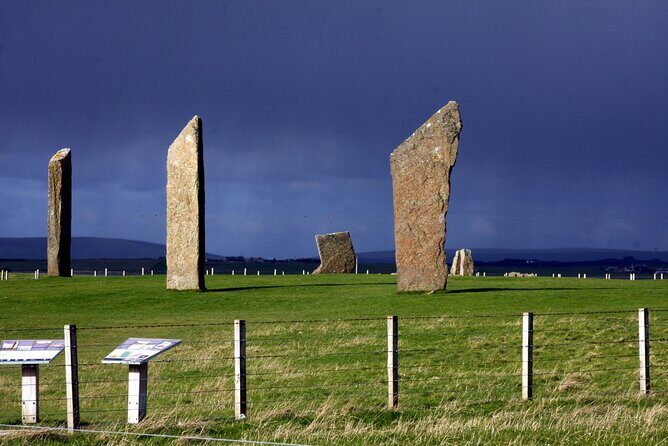
- Guided Orkney highlights: Standing Stones of Stenness and the Ring of Brodgar are part of the included plan.
- Archaeology you can walk through: Skara Brae lets you see preserved Stone Age houses, not just photos.
- NC500 coast time: you’ll drive a scenic section and then stretch your legs at Latheronwheel Harbor.
- A tough-to-ignore Orkney ferry connection: included ferries help you avoid the headache of piecing transport together.
- Good value if you budget the extras: whisky distillery tours and several site entries add up, so plan ahead.
From Edinburgh at 8:30: what this 5-day loop really feels like
You start early, meeting at 256–260 Morrison St in Edinburgh (EH3 8DT) at 8:30am. For a trip this big, that early start matters. It buys you daylight for drives, which is a big deal up north where weather can shift fast.
This is a classic “see a lot without doing mental math” style of tour. You’ll spend mornings and afternoons moving between regions, with set stops built around walking time and photo time. You’ll also get short guided walks in both the Highlands and Orkney, which helps you learn what you’re looking at without needing a guidebook for every turn.
The pace is the key tradeoff. You’re not signing up for slow and sleepy. You’re signing up for a focused circuit: Highlands → North Coast 500 → Orkney (two nights in Kirkwall) → back south through the northern mainland → Loch Ness/Glencoe/Loch Lomond finish. If you like structured days with breathing room built in, you’ll feel comfortable. If you hate car time, you may find some days long.
Language is English, tickets are mobile, and the tour is offered with a small group size (up to 16). That group size is one of the reasons this type of tour works well: you get personal attention without the chaos of a big bus.
You can also read our reviews of more tours and experiences in Edinburgh
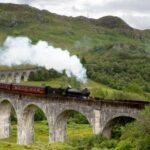
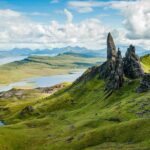
Cairngorms National Park, Culloden, and Inverness: a strong Highland opener
Day one sets a tone: nature, then history, then back to nature again. You begin in Cairngorms National Park, where you get a guided woodland walk (about 1 hour 30 minutes). This is a smart first stop because it slows you down after travel time and gives you a feel for the region—trees, trails, and a calmer rhythm before the more emotionally heavy sites.
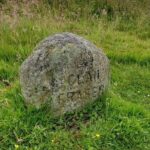
Then comes Culloden Battlefield (around 1 hour 30 minutes). The visitor center admission isn’t included, but you can still visit the battlefield without paying that extra fee. I like that approach for two reasons. First, you’re not forced into an extra ticket to access the main experience. Second, you can spend your time on the ground where the story lives, not just in a museum room.
After that, you head into Inverness for about 2 hours of free time. This is valuable because it gives you choices: coffee, browsing, a proper lunch, or just wandering and getting your bearings. You’re also hitting a real town, not only viewpoints and monuments.
Next you’ll stop at Clava Cairns, a prehistoric burial site with standing stones dating back over 4,000 years (about 30 minutes). It’s short, but it’s a good reminder that Scotland’s past isn’t only castles. Then you end the day with Aviemore for lunch (about 1 hour 0 minutes), a town known for its closeness to lochs and mountain trails.
Finally, there’s a Dalwhinnie Distillery stop (about 30 minutes). You won’t have time for a long tour, but you can taste whisky or browse the shop for gifts. Even if you’re not a whisky superfan, this is a Scotland-friendly way to end the first day without turning it into a full day of “only museums.”
North Coast 500 scenery and the Italian Chapel at Latheronwheel Harbor
On day two you head out north from Inverness along a section of the North Coast 500 (about 3 hours). This part of the trip is for people who want dramatic coast driving without needing to map every mile yourself. It’s also where timing matters: you’ll want layers and a good camera strap, because sea wind is real and sudden.
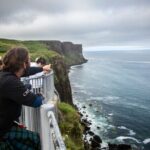
A quick leg-stretcher comes at Latheronwheel Harbor. You get a coastal walk (about 25 minutes) with views of cliffs and the sea. It’s short, but it’s the kind of stop that turns a long drive into something memorable.
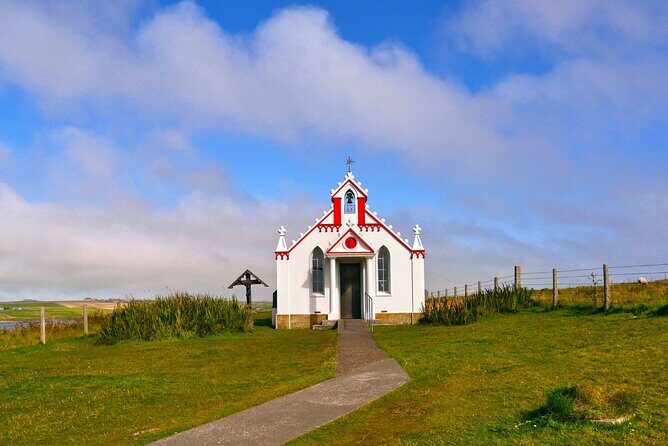
Then you visit the Italian Chapel (about 30 minutes). This chapel was built by Italian prisoners of war during World War II, and the story gives the building weight. Even on a tight schedule, it’s one of those places where you’ll feel the human scale behind the setting.
After that, you go to Scapa Distillery for about 2 hours. Admission and the tour fee aren’t included, but you’ll have the chance to take a tour and even try a dram if you choose. Whisky stops can feel repetitive on some tours, but this one works better because it’s paired with Orkney-specific context, not just a generic tasting room.
You finish the day in Kirkwall, the Orkney capital, with about 1 hour of free time. You’ll stay two nights here, which is a huge quality-of-life improvement. You’re not constantly packing and repacking suitcases while you learn the island rhythm.
Kirkwall and St Magnus Cathedral: Vikings, town wandering, and easy orientation
Day three begins in Kirkwall (about 1 hour 15 minutes). This is one of the smartest ways to do Orkney: start with the town first, then move outward to the big archaeological sites.
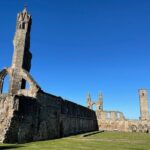
You’ll have a chance to visit St Magnus Cathedral, perched near the center of Kirkwall. It’s an easy stop to fit into the day because the cathedral gives you a visual anchor for the Viking-era story you’ll be hearing all week. And because it’s in town, you’ll likely find yourself mixing history with normal life: small shops, cafes, and quiet streets.
This mix matters. Orkney can feel otherworldly because of the scale of the ancient sites. Having a town hour beforehand keeps your brain from getting overwhelmed.
From there, you head into the archaeological focus.
Maeshowe plus the Ring of Brodgar: when 5,000 years feels close
Orkney is where this tour earns its reputation. You’ll visit multiple Stone Age sites, and each one offers a different kind of experience—tombs, circles, and preserved homes.
One of the big early moments is Maeshowe Chambered Cairn (about 1 hour 30 minutes). An expert guide is part of this stop, and entry isn’t included. If you’re trying to choose what matters most, this is the kind of site where a guided explanation helps because the layout and purpose aren’t always obvious on sight alone.
Then you visit the Standing Stones of Stenness (about 45 minutes). This one is included in the tour’s included guided highlights, which is nice because it’s one of the most meaningful settings. You also get a chance to see small building foundations from homes from the same broad period. That’s a big deal for how you’ll feel about the site. You’re not only seeing monuments. You’re also seeing the idea of daily life—where people lived, worked, and stayed close to their rituals.
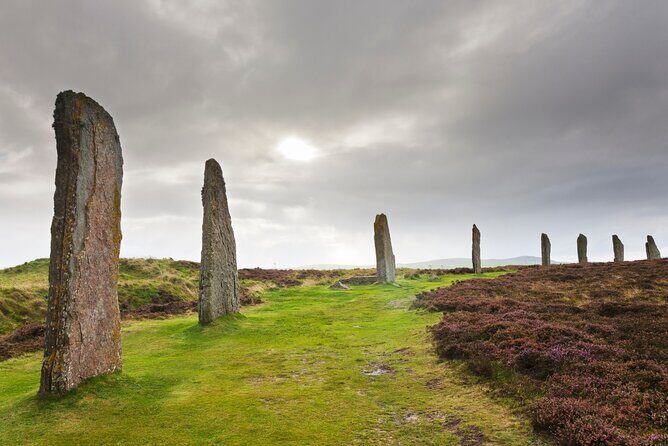
Next comes the Ring of Brodgar (about 45 minutes), included as well. This is a large stone circle setting and one that helps you understand the scale of community effort required to build something like this. It’s also the kind of place where the light changes quickly, so having time rather than rushing through matters.



Skara Brae: the Stone Age that you can walk into
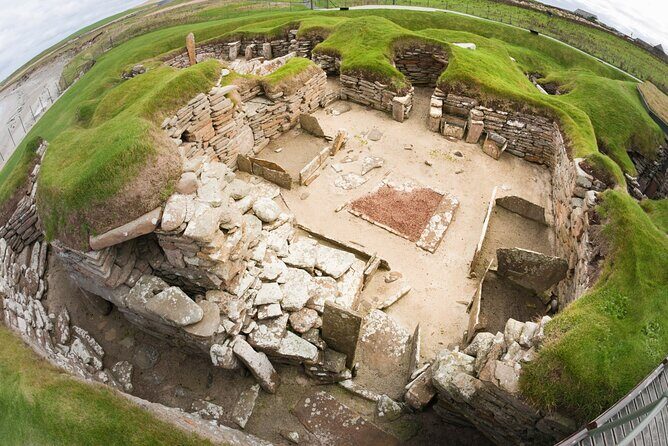
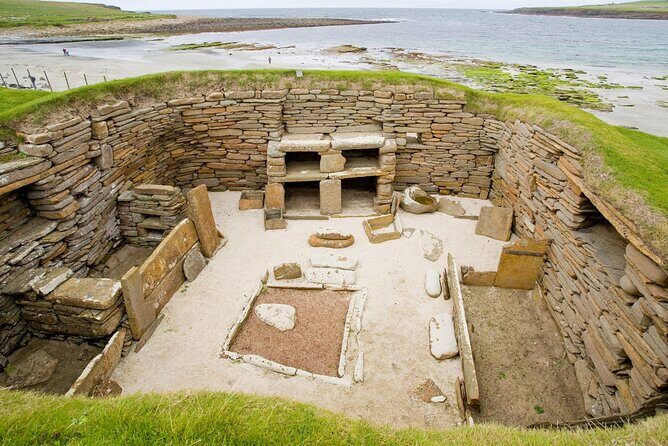
The tour closes the Orkney archaeological cluster with Skara Brae (about 1 hour). Entry isn’t included here either, but the payoff is huge. This is a site where you can actually walk through preserved Stone Age homes—beds, shelving, and the structure of the dwelling. It turns “ancient history” from a concept into something you can mentally inhabit.
This is also where I think this tour gives you good value for the money. If you’re going all this way, Skara Brae is the kind of stop that makes the drive and the ferry time feel worth it. Not every tour offers a walk-through that physical; this one does.
Ferries, John o Groats, and Grey Cairns of Camster: the northern mainland shift
Day four takes you off Orkney. First you cross by ferry from St Margaret’s Hope to the mainland (about 1 hour 30 minutes). That’s included, and it matters because ferry schedules are one of those travel details that can wreck your day if you try to DIY without a buffer.
Once you’re back on the mainland, you go to John o Groats (about 25 minutes). This is a quick village stop with the famous fingerpost photo moment. It’s brief, but it’s part of the North Coast 500 culture, and the time is enough to say you were there without turning it into a half-day detour.
Then you visit Grey Cairns of Camster (about 45 minutes). This is the stop you’ll want to think about in advance. You can crawl on your hands and knees into the center of the cairn, and the note you should take seriously is that you need good mobility and no fear of cramped spaces. If that sounds like a no-go for you, you can still experience the site from outside, but the full effect depends on getting inside.
After that, you head back toward Inverness for about 2 hours of time, which is a good pause before more sights. Then you visit Castle Sinclair Girnigoe ruins (about 45 minutes). It’s a 16th-century fortress ruin with coastal views, which helps balance the tight indoor feeling of cairns and tombs.
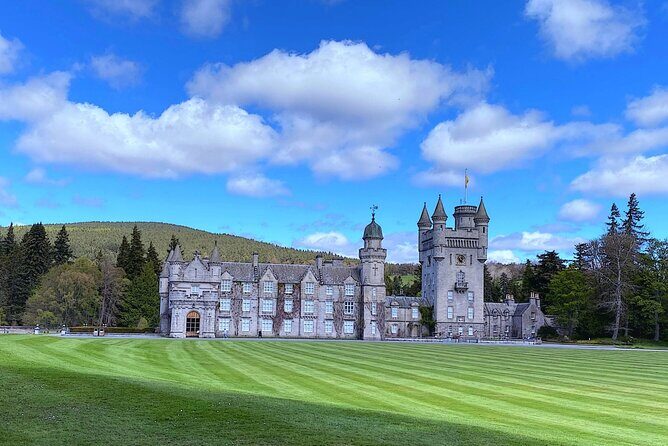
The final stop of the day is Dunrobin Castle and Gardens (about 1 hour). Entry isn’t included, but the castle is described as a fairy-tale-like structure with grand rooms and garden strolls with coastline views. Even if you skip entry, the area around it can still offer great scenery, but the value depends on how much you want castle time.
Loch Ness, Glencoe, and Loch Lomond: the finish you’ll remember
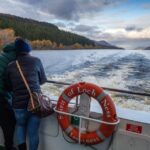
Day five is your final sweep south. You start at Loch Ness (about 2 hours). You have the chance to spot Nessie during a Loch Ness cruise, but the cruise isn’t included and is an added cost (listed as about £15). I like that this is optional. If the cruise fits your interests, do it. If you’d rather stretch your legs on shore or keep the day simple, you have flexibility.
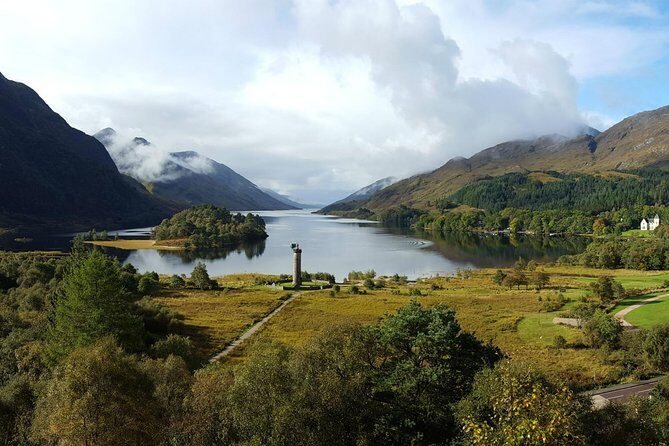
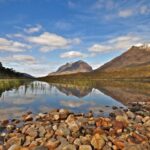
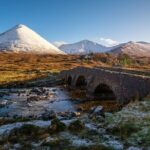
Then you head to Glencoe (about 45 minutes). This is one of Scotland’s most dramatic valleys, and even with short time, it tends to do its job. The scenery here is the star, so dress for wind and keep your schedule breathing room for photos.
Next is Loch Lomond and the Trossachs National Park (about 1 hour). The tour note mentions wildlife, culture, and history, and the time is short enough that you’re likely to focus on viewpoints and key spots rather than deep museum-style stops. Still, it’s a strong “Scotland sampler” before you leave the Highlands again.
Finally, you’ll travel through the Scottish Highlands (about 4 hours). Since there’s no single named stop listed for that final block, I’d treat it as a moving finale—time to look out the window and soak up what you already learned about the regions.
Price and what you’re really paying for at $928.87
At $928.87 per person, this tour is not the cheapest way to do Scotland. But the pricing starts to make sense when you match it to what you get:
- Ferries included: both the Orkney ferry connection going out and the return ferry are included. That alone can be a big part of the cost and stress saved.
- Two nights in Kirkwall are built into the plan: that gives you time to explore Orkney without constant overnight moves.
- Guided visits are included for the biggest stone-circle moments: Standing Stones of Stenness and the Ring of Brodgar aren’t just listed; they’re part of the guided included experience.
- You get expert-led context on major sites: Maeshowe includes an expert guide, and guided short walks happen in the Highlands and Orkney.
What will add money on top (listed as approximate fees) includes: Culloden Moor visitor center (about £15), Dunrobin Castle (about £15), whisky distillery fees (about £22), Maeshowe entry (about £11), Skara Brae entry (about £13), and the Loch Ness cruise (about £15). The Italian Chapel and Scapa Distillery tour also show as not included.
My practical take: if you plan to visit most ticketed sites and do the Loch Ness cruise, you’ll want to budget extra right away instead of reacting at the bus stop. If you’d rather keep things lean, you can still enjoy the included stops and many of the sights are possible without paying extra entry fees (Culloden battlefield is specifically noted that way).
Also, start with a simple packing plan. Bring layers, a rain layer, comfortable shoes, and something warm for ferry decks and coastal walks. The tour can be very scenic—and also very windy.
Who this tour fits best (and where it might not)
This tour fits best if you like a guided framework and you’re excited by Orkney’s stone-age sites. If your idea of a great trip is learning the why behind the stones—how these places were used, what they mean, and what Scotland’s regions were like in different eras—this will click.
It also works well for people who want the North Coast 500 without the work of self-driving. You get the scenic drive time plus the walking stops, and you don’t have to coordinate every turn.
Where it may not fit:
- If you have mobility or walking limits, the tour notes it is not recommended for travellers with mobility or walking problems, and Grey Cairns of Camster is specifically described as needing good mobility plus comfort with cramped space.
- If you hate early starts and want a slow pace, some days will feel busy with multiple stops and long scenic drives.
On the other hand, the tour is designed so that most travellers can participate, and the group stays small. That balance makes it easier to adapt within reason if a stop takes less time or you want to ask more questions.
Should you book this Orkney and North Coast 500 tour from Edinburgh?
I’d book it if you’re the type of traveler who wants big-name Scotland without splitting it into multiple separate trips. Orkney’s mix of Viking-town feel in Kirkwall and the heavy-hitting archaeology sites makes a strong case for itself, especially when guided moments like Stenness and Brodgar are included. The added bonus is that you also get Cairngorms and Culloden early, then finish with a classic trio: Loch Ness, Glencoe, and Loch Lomond.
Skip this tour if you’re mobility-limited or if you know you won’t want to pay extra for several ticketed sites. The route is active, and the optional extras are not small-ticket add-ons.
If you’re on the fence, here’s my decision shortcut: if you want Orkney’s ancient sites as the core, with the NC500 and Highlands as the surrounding story, this is a smart fit.
FAQ
What time does the tour start in Edinburgh?
It starts at 8:30am at the meeting point on Morrison St (256–260 Morrison St, Edinburgh EH3 8DT).
Where does the tour meet and where does it end?
It meets at 256–260 Morrison St, Edinburgh EH3 8DT and ends back at the same meeting point.
How long is the tour?
It runs for 5 days (approx.).
How large is the group?
The tour has a maximum of 16 travelers.
Is the tour in English?
Yes, it’s offered in English.
What’s included in the tour price?
Included items are the ferries to the Orkney Islands and back to the mainland, ferry to the Mainland from the Orkney Islands, guided short walks in the Highlands and Orkney, and visits to Standing Stones of Stenness and the Ring of Brodgar.
What is not included?
Not included are meals and snacks, entry to Culloden Moor Visitor Center (about £15), Dunrobin Castle (about £15), whisky distillery fees (about £22), Maeshowe Chambered Cairn entry (about £11), Skara Brae entry (about £13), and the Loch Ness cruise (about £15).
Do I need to buy entry for Culloden?
The Culloden Battlefield can be visited without paying the visitor center fee, but the visitor center entry is not included.
Is this tour suitable for people with mobility issues?
It’s not recommended for travellers with mobility or walking problems, and Grey Cairns of Camster specifically needs good mobility and comfort with cramped spaces.
What’s the cancellation policy?
You can cancel up to 6 days in advance for a full refund. A 50% refund is available if you cancel 2–6 days before the experience start time. Less than 2 days before the start time is not refunded.