REVIEW · WALKING TOURS
Edinburgh: Dean Village & New Town Walking Tour
Book on Viator →Operated by Edinburgh Walking Tours · Bookable on Viator
Quiet streets can teach you more. This walking tour links Dean Village with the UNESCO New Town, mixing Georgian architecture, the Scottish Enlightenment, and even the story behind the area’s secret bars. You’ll walk from the city’s showpiece squares into quieter, slower lanes—then end in St. Andrews Square with classic views toward Edinburgh Castle.
Two things I really like: you get a full contrast in one outing, from medieval water-mill life in Dean Village to the crisp grid and crescents of the New Town. I also like that it’s built around real people—Scottish thinkers and writers, plus science and public figures—so the history feels like street-level context instead of museum talk. The one consideration: it’s a good-weather walk, so if rain rolls in, expect it may be rescheduled or refunded.
In This Review
- Key points to know before you go
- Why Dean Village and the New Town fit together
- Getting oriented: Hope Street start, 2.25-hour pace, and a small group
- Stop 1: Dean Village’s water-mill calm and bread-themed stone details
- Charlotte Square to the Georgian House: Athens of the North on foot
- Rose Street and the New Town’s secret bars idea
- Castle Street and Princes Street Gardens: castle views with meaning
- Scott Monument: why the world’s writer monument matters
- George Street, The Dome, and the science-to-street vibe
- Melville Monument and Dundas House: colonial connections and Palladio-style design
- Price and value: what $27.37 buys you in Edinburgh time
- Who this walk suits best (and who might want a different plan)
- Should you book this Dean Village and New Town walking tour?
- FAQ
- How long is the Dean Village & New Town walking tour?
- Where does the tour start and end?
- Is admission included for the stops?
- Do I need to print anything?
- How big is the group?
- Is it suitable for most people?
- What happens if the weather is bad?
Key points to know before you go
- Dean Village first: a calm pocket near Princes Street with medieval-era clues like mill stones and bread-themed stone plaques
- UNESCO New Town streets: Charlotte Square, open spaces, and neoclassical architecture tied to the Scottish Enlightenment
- Tight timing: about 2 hours 15 minutes with short stops that keep the pace easy and focused
- Views are part of the lesson: castle-and-castle-rock angles from Princes Street Gardens and Castle Street
- Monuments with context: Scott Monument’s scale, plus stories connected to British colonial time at Melville Monument
- Small group feel: max 20 travelers, and the guide gets consistent praise (including Irene)
Why Dean Village and the New Town fit together
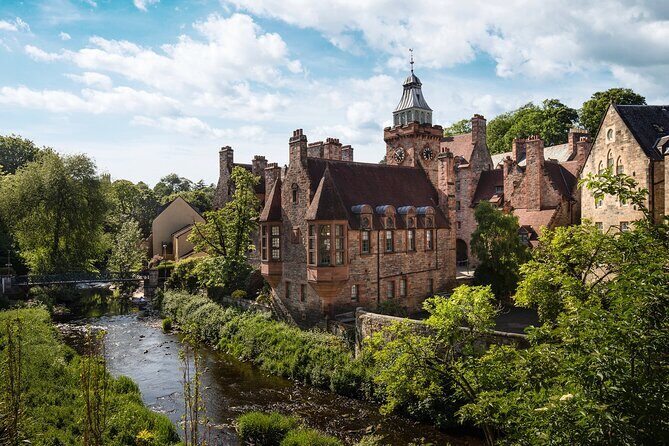
Edinburgh can feel like two different cities. The Old Town crowds you; the New Town corrects the view. What makes this tour smart is that it pairs those worlds in a single loop: you start in Dean Village, then shift into the controlled elegance of the New Town grid.
Dean Village is the quick reset button. It’s a small area just a few steps from Princes Street, and it feels like a world away: water mills, quiet streets, and stone details that hint at what life used to look like. Then you step back into Edinburgh’s grander plan—squares, crescents, and neoclassical buildings that reflect the Scottish Enlightenment, when the city earned the nickname Athens of the North.
This is also a walk built for understanding, not just photo stops. The route is designed so the guide can connect architecture to the bigger story: thinkers, inventors, writers, and how the city’s growth was shaped by wider forces (including colonialism). You’ll come away with a clearer sense of why Edinburgh looks the way it does.
You can also read our reviews of more walking tours in Edinburgh



Getting oriented: Hope Street start, 2.25-hour pace, and a small group
The tour starts at 2-4 Hope St (EH2 4DB). You finish outside Dundas House in St. Andrews Square (EH2 2YB), which is convenient because it puts you close to central shopping, cafés, and the vibe of the New Town.
Timing matters here. You’re out for about 2 hours 15 minutes, with each stop lasting around 5–15 minutes. That pacing is great if you want depth without burning half a day. It also helps if your legs are already tired from Old Town hills earlier in your trip.
Group size stays under 20, which makes it easier to hear the guide and to ask questions at stops like Charlotte Square and Princes Street Gardens. You also get a mobile ticket, which is one less thing to manage while you’re sightseeing.
One more practical tip: wear comfortable walking shoes. This is not a sit-down tour, and you’ll be moving between neighborhoods on foot.
Stop 1: Dean Village’s water-mill calm and bread-themed stone details
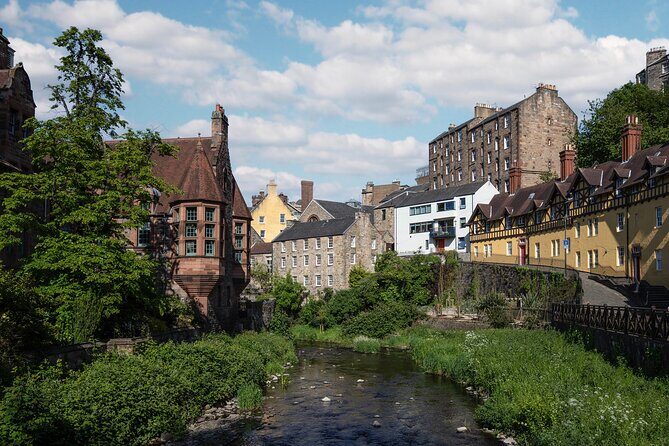
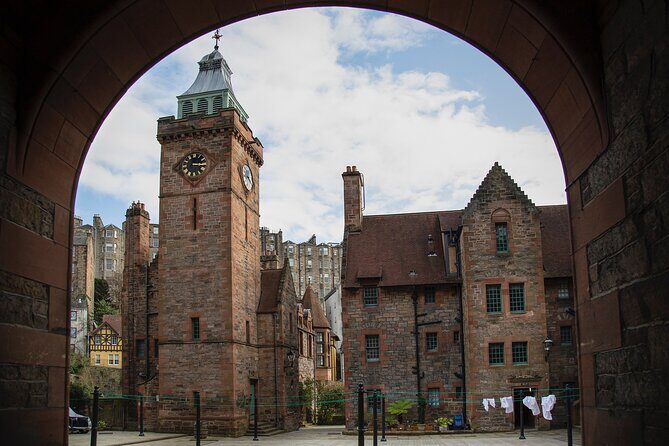
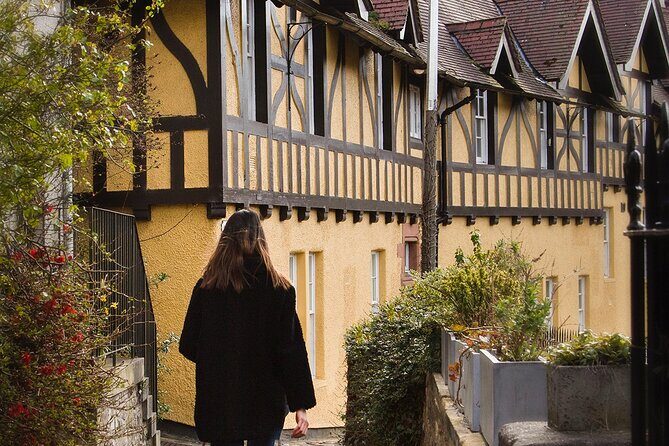
Dean Village is where the tour finds its heart. You begin here, and the first stretch sets the tone: a peaceful neighborhood that still carries medieval traces. The basics are simple and memorable—Dean Village dates back to medieval times and was once a hub for bakers, supported by the water-mill setup along the river.
Look for the physical clues the guide points out. You’ll see mill stones and stone plaques decorated with baked bread and pies. Those details sound small, but they do something useful: they translate “medieval” into something you can actually picture.
This stop is listed for about 30 minutes, and that extra time makes sense. Dean Village isn’t just a transit point. It’s a place to slow down, take photos, and let the quiet land before you jump into Edinburgh’s grand planning in the New Town.
What to consider: because you start so close to the center, Dean Village can still have foot traffic. Go for the smaller moments—street corners, stonework, and that shift in atmosphere—rather than expecting it to feel empty.
Charlotte Square to the Georgian House: Athens of the North on foot
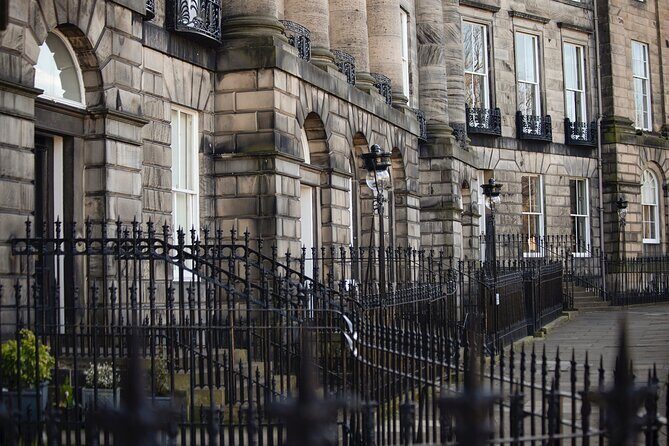
After Dean Village, you head toward the New Town, a UNESCO World Heritage area. The first major anchor is Charlotte Square, a spot where you can see why Edinburgh became famous for order, symmetry, and classical design.
Here’s the key idea the guide works on: the New Town’s open spaces and crescents aren’t just pretty. They represent a worldview—public life shaped by Enlightenment thinking, where reason and design went hand in hand. This is where the nickname Athens of the North becomes more than a slogan.
Then you pause at the Georgian House (National Trust for Scotland). Even though you’re stopping outside, this is still valuable. The point is to understand high-society life in the 18th and 19th centuries—how Georgian Edinburgh lived, hosted, and performed status through architecture and layout.
You’ll likely get a clear sense of the contrast: Old Town storytelling is about tight lanes and survival. New Town storytelling is about planned living and social display. Charlotte Square and its Georgian landmark help you feel that difference fast.
One practical note: this section is relatively short (about 10 minutes for Charlotte Square, and another 10 outside the Georgian House), so keep your eyes up. The guide will be connecting concepts—Enlightenment ideals, architectural style, and city identity—while you’re moving.
Rose Street and the New Town’s secret bars idea
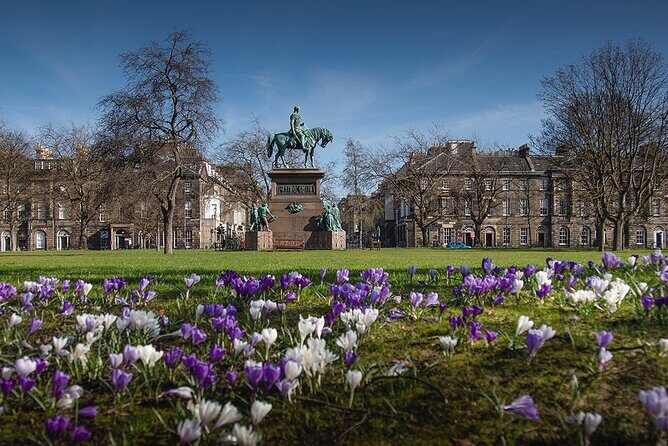
Next comes Rose Street, a lane famous for pubs. That alone is fun, but the tour adds a historical angle: the guide explains the reason behind the establishment of secret bars in the New Town.
I like this kind of storytelling because it answers a question you might not think to ask. Instead of treating the pubs as just a night-out stop, the tour frames them as part of the city’s social structure. You get a hint that Edinburgh’s public face and private habits didn’t always match.
This is one of the quicker stops (around 10 minutes), so don’t expect a long lecture. What you should do is listen for the guide’s explanation and then look at the street layout. Small changes in entry points and hiding places often make more sense when you’re standing where people used to go.
If you’re a first-timer in Edinburgh, this is also a great moment to file away restaurant and pub suggestions for later. In the reviews, the guide’s local tips get mentioned as a real bonus, especially when you’re trying to find places that aren’t just aimed at cruise-ship crowds.






Castle Street and Princes Street Gardens: castle views with meaning
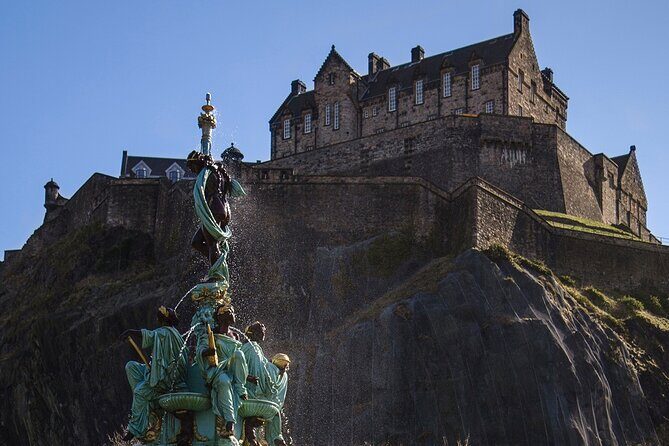
From Rose Street you turn onto Castle Street. The payoff here is the view: you get an excellent line toward the castle and castle rock. It’s not just scenery. The guide uses the angle to connect the New Town plan to the city’s power center, which helps you understand how Edinburgh arranged itself around its iconic geography.
Then you cross Princes Street and step into Princes Street Gardens, one of Edinburgh’s main parks. You’ll also stop to admire examples of public art and—yes—more castle views. This is one of the nicest “breather” segments because parks give your feet a rest while still keeping the walking loop active.
You can think of these stops as your quick orientation session. Once you’ve seen where the castle fits visually from Princes Street Gardens, the rest of the New Town feels easier to map in your head.
Time-wise, it’s about 10 minutes for Castle Street, then around 15 minutes in the gardens. That’s enough time to take photos without feeling stuck.
Scott Monument: why the world’s writer monument matters
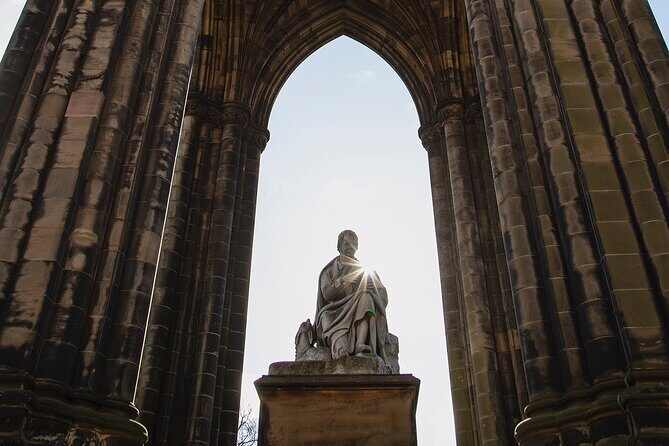
After Princes Street Gardens, you head toward the Scott Monument. This is a landmark stop with a built-in conversation: the guide covers its history and architecture.
Here’s the detail that sticks: the Scott Monument is noted as the largest monument in the world dedicated to a writer. That fact changes how you look at it. It isn’t only a pretty skyline feature—it’s the city claiming cultural identity, in stone.
The stop is about 15 minutes, which is perfect for learning the basics and then deciding if you want to return later for a closer look. If you’re into literature or how cities build reputations, this is one of the most memorable points on the walk.
George Street, The Dome, and the science-to-street vibe
Next you return to the New Town grid and head along George Street on the east side. This stretch is known for cafes, restaurants, and shops, and it also has public statuary you can’t miss once you know to watch for it.
The tour highlights statues dedicated to King George IV and James Clerk Maxwell. Maxwell’s name is one of those that connects Edinburgh to real scientific influence, and seeing it tied to street-level monuments makes the city feel more global.
You’ll also pass by the Dome, with impressive neoclassical architecture. This is the kind of stop where you’ll get more out of it by slowing down for a few seconds. Look up at proportions, columns, and the overall style. Even if you’re not an architecture expert, the guide’s framing helps you read what you’re seeing.
This part is shorter (about 10 minutes for George Street, and around 5 minutes at The Dome). Treat it like a “scan-and-learn” moment: take in what you can, and let the guide’s context do the rest.
Melville Monument and Dundas House: colonial connections and Palladio-style design
As the walk closes in, you reach two final anchors: Melville Monument and Dundas House.
Melville Monument sits at the end of Princes Street, in St. Andrews Square. The guide explains why it was built and how it ties to British colonial time. You might not automatically connect a monument to that wider story, but the tour pushes you to. That’s one of the benefits of ending in the open, civic space of St. Andrews Square: you can see the monument’s place in public memory.
Across the street is Dundas House. You’ll see the kind of architectural lineage that makes Edinburgh feel like a training ground for ideas. The tour notes that the architect who built the house was inspired by the books of Italian Renaissance architect Andrea Palladio. And today, the building is used as a bank.
If it’s open, the tour says you’ll enter. If it’s not, you still get the outside view plus the design context—Palladio influence is the sort of detail that makes a city street feel like it has an education built into it.
Time-wise, Melville Monument is around 10 minutes, and Dundas House is about 10 minutes. The walk ends just outside Dundas House, putting you right back in the heart of the New Town for your next move.
Price and value: what $27.37 buys you in Edinburgh time
At $27.37 per person, this tour sits in the “good value” zone for central Edinburgh. The biggest reason isn’t just the cost—it’s what you get for that time.
You’re paying for a local guide plus a structured route that hits both Dean Village and key New Town landmarks in about 2 hours 15 minutes. That’s efficient if you already saw the Old Town and want to round out the picture. You also get a mobile ticket, which is simple, and each listed stop is admission free for what’s included at that point in the walk.
Add the group size limit of 20, and the math improves. You’re not fighting for attention at a crowded meet-up spot, and you’re not stuck in a long transit shuffle. Reviews consistently mention the guide’s friendliness and the fact that you learn a lot in just a couple hours, which is exactly how you want to spend vacation time.
If you’re trying to plan around multiple neighborhoods, this is one of the cleaner “two-borough” walks in Edinburgh: medieval water-mill life plus Georgian-era planning plus a few landmark stops that connect art, architecture, and power.
Who this walk suits best (and who might want a different plan)
This is a strong match if you:
- want New Town architecture without doing it alone
- like street-level history tied to real people, not only dates
- want a route that starts in a calm pocket and ends in the livelier New Town
- already did the Old Town and want something that feels different
It’s also a solid choice if you enjoy architecture and monuments, but you don’t want to spend the entire day in one “museum mode.” The walk keeps moving, so you get variety: Dean Village quiet, Charlotte Square grandeur, Princes Street views, and civic monuments in St. Andrews Square.
The main reason to pause: if you don’t handle walking well, this may feel like a lot. Also, the tour notes it requires good weather. If rain is likely, check the day-of plan.
Should you book this Dean Village and New Town walking tour?
I’d book it if you want Edinburgh in two speeds: calm first, grandeur second. The combination of Dean Village atmosphere and the New Town’s UNESCO-classical design makes this more than a checklist walk. With a small group and a guide like Irene (named in reviews), it’s also the kind of tour where the explanations genuinely help you notice what matters.
Skip it only if you’re hunting for a long, inside-visit day or you know the weather will be miserable. Otherwise, for a half-day that teaches you how Edinburgh was built—socially, intellectually, and visually—this one is a smart use of time.
FAQ
How long is the Dean Village & New Town walking tour?
It runs for about 2 hours 15 minutes.
Where does the tour start and end?
The tour starts at 2-4 Hope St, Edinburgh EH2 4DB, UK. It ends outside Dundas House in St. Andrews Square, Edinburgh EH2 2YB, UK.
Is admission included for the stops?
The itinerary lists stops as admission ticket free, including the Dean Village stop and the key New Town locations like Charlotte Square and Princes Street Gardens.
Do I need to print anything?
No. You use a mobile ticket.
How big is the group?
The tour has a maximum of 20 travelers.
Is it suitable for most people?
The tour says most travelers can participate.
What happens if the weather is bad?
The experience requires good weather. If it’s canceled due to poor weather, you’ll be offered a different date or a full refund.