REVIEW · HISTORICAL TOURS
Medical and Surgical History of Edinburgh – Private Walking Tour
Book on Viator →Operated by 7 Hills Tours Edinburgh · Bookable on Viator
Medical care in Edinburgh has street addresses. This private walking tour strings together the places where medicine and surgery learned to grow up in public—one close, hall, and courtyard at a time. I like that it mixes big ideas (teaching hospitals, medical schools, women’s access) with very walkable, specific locations around the Royal Mile area.
Two things I especially like: first, the pacing works—multiple short stops plus a true break makes it easier to absorb the stories without feeling rushed. Second, the guide style is personal; I’ve seen physician-led commentary praised for being warm, chatty, and funny in a grounded way, including mentions of Moray and Dr. Grigor. One drawback to consider: it’s still a 2.5-mile walk, and it isn’t recommended if you have chronic or painful musculoskeletal issues.
In This Review
- Key highlights at a glance
- A Doctor-Led Walk Through Edinburgh’s Medical Story
- Royal Mile: Medicine and Surgery’s First Public Addresses
- Cowgate and Robertson’s Close: The Little House to a Royal Infirmary
- Surgeons’ Hall Museums: A Break Plus the Fight for Women’s Medical Education
- University of Edinburgh: Medical School Life, Drudgery, and Trade-Offs
- Bristo Place and Charles Darwin’s Med-Student Lodgings
- Lauriston Place Finale: Stories at the Former Royal Infirmary Entrance
- Price, Time, and What You Actually Get
- Pacing That Makes History Feel Usable
- Walking Distance and Fitness: Know the Real Limitation Up Front
- Weather and Timing: Plan for a Good Day
- Who Should Book This Tour—and Who Might Skip It
- Should You Book? My Simple Decision Guide
- FAQ
- How long is the Medical and Surgical History of Edinburgh private walking tour?
- Where does the tour start and end?
- Is this a private tour?
- Is admission included for the stops?
- Is coffee or tea included?
- What’s the total walking distance?
- What language is the tour in?
- Is it suitable for people with mobility or pain issues?
- What weather conditions are required?
- Are service animals allowed?
Key highlights at a glance
- Royal Mile origins: start where Edinburgh’s medical story began, including the alley linked to the College of Physicians.
- Cowgate hospital roots: Robertson’s Close and the first teaching-hospital site tied to The Little House.
- Surgeons’ Hall Museums: a built-in break plus the long struggle for women to enter medical education.
- University of Edinburgh sites: medical school buildings and student-life context, not just dates.
- Charles Darwin’s med-student lodgings: a quick pass that adds a surprising personal connection.
- Lauriston Place finale: wrap up at the former Royal Infirmary entrance plaza with stories of major doctors and surgeons.
A Doctor-Led Walk Through Edinburgh’s Medical Story
This isn’t a museum-only day. It’s a real city walk that treats Edinburgh’s streets like a textbook—because, here, the buildings still show the evolution of care. You move through about 3 to 4 hours with guidance throughout, finishing at the former Royal Infirmary’s grand frontage at the University’s Edinburgh Futures Institute area.
I like that it stays focused on medical and surgical education and institutions, instead of turning into a general “history of Scotland” stroll. And because it’s private, your group can set the tone—questions, pauses for photos, and time spent where you care most.
You can also read our reviews of more walking tours in Edinburgh



Royal Mile: Medicine and Surgery’s First Public Addresses
Your tour starts at Hunter Square (EH1) and gets moving down the Royal Mile, Edinburgh’s oldest major street. This first stretch matters because it frames the whole theme: where medicine and surgery became organized, taught, and discussed in the city rather than kept private.
At this stop, you’ll learn about the origins of Edinburgh medicine and surgery and see the alleyway connected to where the College of Physicians began. The payoff here is seeing how institutions start small—then gain legitimacy as they grow their networks and training.
Cowgate and Robertson’s Close: The Little House to a Royal Infirmary
Next is Cowgate, where the tone shifts from beginnings to early teaching hospitals. You’ll spend around an hour around the area, locating Robertson’s Close—linked to the site known as The Little House, which is described as the first teaching hospital.
Then the walk continues to the successor complex, including the first Royal Infirmary of Edinburgh. This is one of the most interesting parts for me because you’re not just learning about medicine as a concept—you’re standing where “training the next generation” physically started to take shape.
Practical note: Cowgate streets can be a little tight and uneven in places, so this is where good walking shoes and careful footing help (and where that 2.5-mile total starts to feel real).
Surgeons’ Hall Museums: A Break Plus the Fight for Women’s Medical Education
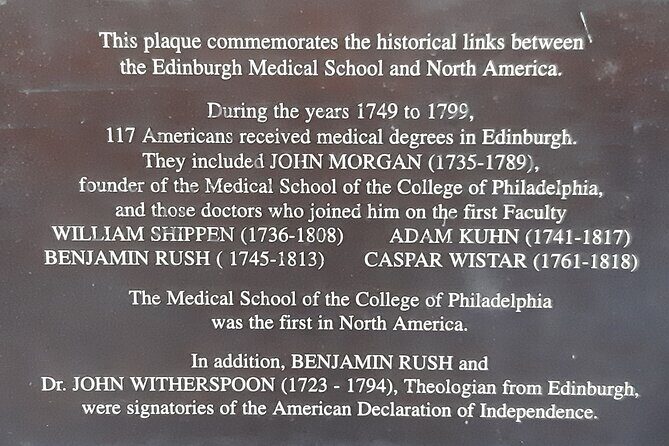
You’ll reach the Surgeons’ Hall Museums area for a refreshment break of about 45 minutes. Even if you skip the cafe itself, this stop functions as a mental reset. It’s also where the tour gets socially sharp, not just clinically focused.
You’ll hear about the long battle for women to be admitted to the Medical School. That storyline adds context to why medical institutions changed when they did—and it’s a reminder that access and eligibility were part of the history of medicine, not a side issue.
One consideration: coffee and/or tea aren’t included. You’ll likely have a chance to buy something, but budget for it since the tour only covers guiding and commentary.
University of Edinburgh: Medical School Life, Drudgery, and Trade-Offs
From the museum area, you move toward the University of Edinburgh with a shorter stop (about 20 minutes). This is where the tour explains Edinburgh’s medical center status and gives a grounded look at medical student life.
Instead of just listing where buildings are, the commentary focuses on the everyday realities—what students did, the drudgery, and the compensations. That’s the kind of detail that helps the whole topic feel human, especially when you’re seeing the institutional sites in a line.
You can also read our reviews of more private tours in Edinburgh





Bristo Place and Charles Darwin’s Med-Student Lodgings
Then comes Bristo Place, where you get a quick-but-memorable connection to another famous figure. You’ll pass by Charles Darwin’s old med student lodgings, which turns this tour from purely medical history into something more personal.
After that, you’ll see (from the walking route) the imposing 1880s Medical School and graduation hall. Even if architecture isn’t your main interest, this stop works because it shows how formal training became more structured and visible over time.
Lauriston Place Finale: Stories at the Former Royal Infirmary Entrance
The tour closes at Lauriston Place, finishing at the grand front courtyard of the former Royal Infirmary of Edinburgh. It’s a short final segment (about 15 minutes) but it lands the plane: stories of doctors and surgeons who graced the institution.
This ending matters because it wraps the arc—from early organization to teaching hospitals to medical schools—into one concentrated setting. You’re also finishing at a high-visibility university-related address: Edinburgh Futures Institute, The University of Edinburgh, 1 Lauriston Pl (EH3 9EF).
Price, Time, and What You Actually Get
At $130.44 per person, this tour sits in the “not cheap, but not crazy” category for a private, guiding-led experience in central Edinburgh. The value isn’t just that it’s private; it’s that the guide commentary runs throughout the walk and you’re also visiting sites where admission tickets are described as free.
The duration—3 to 4 hours—is also realistic for this topic. You get enough time to cover multiple institution eras without turning it into a full day commitment. And because it’s an average 75 days booked in advance, you’ll do yourself a favor by planning early if you’re traveling in peak season.
Pacing That Makes History Feel Usable
This tour’s pacing is a big part of why people love it. Short-ish segments keep attention up, and the refreshment break is timed so you don’t end up mentally tired before the most emotional topic (women’s access to medical training) is covered.
Also, guides are described as engaging and discussion-friendly—people mention conversation about healthcare alongside history. That matters because it turns the walk into a dialogue instead of a lecture, and you’ll get more out of it if you enjoy asking questions.
Walking Distance and Fitness: Know the Real Limitation Up Front
You’ll cover about 2.5 miles, and the guidance says moderate physical fitness is required. It also clearly notes that the tour wouldn’t be recommended for people with chronic and/or painful musculoskeletal health conditions.
If you’re generally steady on your feet, you should be fine. If you struggle with uneven sidewalks, long continuous walking, or pain flares, this is the kind of tour where you may want to choose something shorter or more accessible.
Weather and Timing: Plan for a Good Day
This experience requires good weather. If the weather turns, you should expect a reschedule option or a full refund rather than forcing the walk forward. Edinburgh can be breezy and changeable, so it’s smart to check forecasts and keep an eye on the day-of conditions.
There’s also a practical time window implied by the venue hours at the finish point, which makes early-to-midday tours easier for planning around any museum add-ons.
Who Should Book This Tour—and Who Might Skip It
Book it if you want medical history that actually happens on streets you can see. This is ideal for people interested in how institutions formed—teaching hospitals, medical schools, and access issues—while still getting the entertainment factor of a guide who can connect stories to modern ideas.
You might skip it if you only want a hands-on museum experience with lots of time inside exhibits. This is street-level and story-driven, with museum time focused at one stop and a break built in.
Should You Book? My Simple Decision Guide
I’d book this if you like themed walks where the subject is specific and the places are meaningful. You’ll get a clean arc: origins on the Royal Mile, teaching-hospital sites in Cowgate, professional history at Surgeons’ Hall, student-life context at the University, and a strong closing finish at Lauriston Place.
If you’re sensitive to walking distance or pain, think carefully. At 2.5 miles, it’s not a “sit-and-stroll” tour, and the company explicitly flags musculoskeletal limitations.
If the weather is good and you want a private, physician-led (and often funny) history walk that stays grounded in real buildings, this one is an easy yes.
FAQ
How long is the Medical and Surgical History of Edinburgh private walking tour?
It runs about 3 to 4 hours.
Where does the tour start and end?
It starts at Hunter Square, Edinburgh EH1 and ends at Edinburgh Futures Institute, The University of Edinburgh, 1 Lauriston Pl, Edinburgh EH3 9EF.
Is this a private tour?
Yes. It’s private, meaning only your group participates.
Is admission included for the stops?
The tour notes admission ticket free at the listed stops.
Is coffee or tea included?
No. The tour includes a refreshment cafe stop, but food and drink are not inclusive.
What’s the total walking distance?
The tour is about 2.5 miles.
What language is the tour in?
It is offered in English.
Is it suitable for people with mobility or pain issues?
It requires moderate physical fitness and is not recommended for people with chronic and/or painful musculoskeletal health conditions.
What weather conditions are required?
It requires good weather. If it’s canceled due to poor weather, you’ll be offered a different date or a full refund.
Are service animals allowed?
Yes, service animals are allowed.