Edinburgh’s Royal Mile feels different after dark. On this evening walk, you get the big landmarks and the lesser-seen lanes in just about two hours. It’s built for people who want to understand what they’re looking at, not just move from photo spot to photo spot.
I love how the tour mixes famous names with the street-level details that explain how the Old Town worked. I also like the small-group pace, which keeps the guide’s commentary front and center instead of turning into a march.
One consideration: if your tour date suffers a guide issue, you may end up waiting at the meeting point. One set of past feedback reported a guide no-show, so show up on time and keep your phone ready for updates.
In This Review
- Key highlights worth your attention
- Why walking the Royal Mile at night feels different
- Price and what you’re really paying for
- Meeting at Abbey Strand, ending by Edinburgh Castle
- Royal Mile Night Walk: what you’ll see, stop by stop
- 1) The King’s official residence in Scotland
- 2) One of Edinburgh’s lesser-known corners
- 3) A former burgh: church and tolbooths
- 4) Backhouse Close: stepping back to the 1500s
- 5) Old City Wall pieces and an Outlander film location
- 6) Goldsmiths House (late 1400s): links to Knox and Mary Queen of Scots
- 7) The cathedral-front area and the Edinburgh tolbooth site
- 8) Place of Proclamations and punishments
- 9) City Chambers built on earlier closes
- 10) 1580s-era hidden corners (the tour’s lesser-visited stretches)
- 11) Lady Stair’s House (1620s)
- 12) One of the oldest Old Town buildings
- What the small-group format changes
- The stories you’ll carry with you
- Who this is best for
- Should you book this Royal Mile small-group walking tour?
- FAQ
- How long is the Royal Mile Walking Tour Small Group?
- What’s the price per person?
- Where does the tour start and end?
- Is the tour offered in English?
- How big is the group?
- Do I need to print anything, or is there a digital ticket?
- Are refreshments included?
- Are service animals allowed?
- What is the cancellation policy?
- What if the tour is canceled because the minimum number of travelers isn’t met?
Key highlights worth your attention
- Evening focus: See a quieter side of Edinburgh’s Old Town after day crowds thin out
- Tight time window: Roughly 2 hours to cover a lot of ground on the Royal Mile
- Small group size: Capped at 12 (and promoted as very intimate)
- Story-first route: You’ll hear about churches, tolbooths, proclamations, and punishments
- Pop-culture stop: A Royal Mile segment includes an Outlander filming location
- Lots of distinct landmarks: From the King’s official residence area to Lady Stair’s House
Why walking the Royal Mile at night feels different
The Royal Mile is famous, but most people experience it in daylight rush mode. This tour is timed for the evening, which changes the mood of the streets and makes the “what am I looking at?” part more interesting. When the pace is slower and the light is lower, the Old Town feels more like a sequence of stories than a checklist.
You’re also not trying to cram in major attractions that swallow your whole afternoon. Instead, you’re given a guided ribbon through key sites on and around the Royal Mile, with commentary that connects the places to the people and events tied to them. For a first visit, that can help you plan your remaining hours smarter.
You can also read our reviews of more walking tours in Edinburgh



Price and what you’re really paying for
At $47.73 per person, this isn’t a budget add-on. But it can be good value if you’ll actually listen to the guide and you care about context. You’re buying three things at once: a route that’s already planned, a guide to explain what you’re seeing, and a small-group setting that makes it easier to ask questions.
The trade-off is also clear: the tour is only about two hours, so it won’t replace a full day of museums or castle time. And refreshments aren’t included, so you’ll want a plan for water or a quick snack before or after.
Meeting at Abbey Strand, ending by Edinburgh Castle
The tour starts at Abbey Strand, Edinburgh EH8 8DU and finishes at 537 Royal Mile, Edinburgh EH1 2ND, ending outside Edinburgh Castle in Castlehill. That end point is handy because it puts you close to one of the city’s most obvious next choices.
You’ll also get a mobile ticket, and the tour is offered in English. It’s near public transportation, which matters in a city where walking is fun but weather can be fast-changing. Since the tour runs on foot and spans the Old Town spine, you’ll want to wear shoes that work well on uneven streets.
Royal Mile Night Walk: what you’ll see, stop by stop
This route is all about contrasts: grand public areas, tightly packed closes (the Old Town lanes), and buildings tied to major figures. Even if you only remember a few details, you’ll come away with a clearer picture of how the Royal Mile evolved.
1) The King’s official residence in Scotland
You start at the King’s official residence in Scotland area. Beginning here sets the theme right away: this is a route where power, authority, and public life show up in the architecture and the street layout. It’s a strong opener because it gives you a reference point for everything you’ll see next.
A minor drawback: because you’re starting at a prominent site, it can feel like a lot of people are around. If you’re hoping for quiet photos, you’ll get better results once you move away from the most obvious frontage.



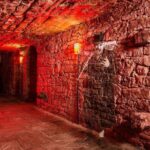


2) One of Edinburgh’s lesser-known corners
Next comes a stop described as one of Edinburgh’s smaller, less-frequented spots. This is where the tour starts separating itself from the usual “main street only” experience. You’ll have a chance to look at how the Royal Mile isn’t just broad viewpoints and famous facades, but also side streets with their own history.
This part works best if you enjoy noticing details: doorways, street bends, and how buildings sit close together. If you prefer big, standalone sights with long viewing time, you may want to keep an eye on the guide’s timeline so you don’t miss the next steps.
3) A former burgh: church and tolbooths
You then hear about an area that was once a separate burgh, with a focus on the Church and Tolbooths. This matters because tolbooths weren’t just random old buildings. They were tied to how communities managed authority, order, and punishment.
If you like history that connects institutions to real street locations, this segment is one of the most satisfying. It turns the architecture into a map of how people lived and enforced rules.
4) Backhouse Close: stepping back to the 1500s
At Backhouse Close, you get a time jump to the 1500s, with commentary that it was once linked to a place of ill repute. Stops like this are why the tour is more than a route: the close itself becomes the story.
The evening timing can help here, because the narrow lane feel often reads better when it’s not bright and flat. Just keep in mind that closes are tight and the group needs to move smoothly.
5) Old City Wall pieces and an Outlander film location
You’ll see parts of the Old City Wall, plus an Outlander film location. This is where the tour can appeal to both history lovers and TV fans. The wall segment helps explain that the city’s boundaries and defenses shaped how people moved—while the filming spot adds a modern layer to the same streets.
If you’re an Outlander watcher, this is likely the stop you’ll think about after. If you’re not, it still helps to hear how pop culture borrows real locations and keeps them on visitors’ radar.
6) Goldsmiths House (late 1400s): links to Knox and Mary Queen of Scots
Next is Goldsmiths House, dating to the late 1400s, with connections to John Knox and Mary Queen of Scots. This is one of the route’s most name-driven stops. When a building ties to major figures, it gives you anchors for memory: you don’t just see stone and signage—you can place it in a wider story.
A practical tip for your own enjoyment: if you know a bit about Knox or Mary already, you’ll get more out of the commentary. If you don’t, don’t worry—you’ll still get the thread that connects the people to the place.
7) The cathedral-front area and the Edinburgh tolbooth site
In front of the cathedral area, you’ll hear that the Edinburgh tolbooth was located there. That’s heavy material, but the tour handles it as place-based history: where something happened matters, and this stop tells you the location for it.
If you’re sensitive to grim topics like punishments and the workings of law, treat this as a “historical context” segment. It’s not graphic in description here, but it’s clearly focused on enforcement and consequences.
8) Place of Proclamations and punishments
Then you move to the Place of Proclamations and punishments. This isn’t just a phrase. It points to the idea that public announcements and public penalties were part of daily civic life.
For me, this is where the Royal Mile stops feeling like a pretty postcard line and starts feeling like a working street. You start noticing how “public square” energy is baked into the layout.
9) City Chambers built on earlier closes
You’ll see the City Chambers, described as built on the site of several closes with a long history. It’s a clever stop because it forces you to look at the present building and ask what used to be there. In Old Town cities, that kind of layered reuse happens constantly, and it’s one reason a guided walk beats solo wandering.
One downside to keep in mind: if you arrive at the City Chambers area with low expectations, you might not notice the older street footprint. The guide’s commentary is what turns it into a story you can follow.
10) 1580s-era hidden corners (the tour’s lesser-visited stretches)
You’ll also hit areas described as lesser-visited and dating to the 1580s. Instead of one big “wow” landmark, this is more about atmosphere and careful observation. It’s the kind of segment that rewards curiosity and good listening.
If you’re expecting constant monumental sights, this may feel slower. But if you like the texture of the Old Town—how streets and buildings read like time periods—this is the payoff.
11) Lady Stair’s House (1620s)
Lady Stair’s House dates to the 1620s. This stop brings you closer to domestic architecture and how notable people and households shaped what got preserved and remembered.
This is also a good moment to look back at what you’ve already learned. Earlier you heard about institutions (tolbooths, proclamations). Here you get a different angle: the street also held private life and the people who influenced it.
12) One of the oldest Old Town buildings
The tour ends with one of the oldest buildings in Edinburgh’s Old Town, where you hear about its history. Ending on something old gives the walk a satisfying close: you finish with a sense of continuity, like the Old Town kept its bones even as the stories changed.
Since the end is near Edinburgh Castle, it also works as a natural lead-in. You’ll likely want to continue your evening from there—either for views, more wandering, or a quick stop before a later plan.
What the small-group format changes
This experience is built for intimacy. It’s capped at 12 people, and the tour description emphasizes a very small group. That matters because the route is packed with stories, names, and place details. When the group is large, a guide tends to generalize. When it’s small, the commentary can stay specific.
There’s also a real-world detail worth knowing from past feedback: on one occasion, a participant ended up being the only person on the tour after another person didn’t show. In that situation, the guide still provided a full tour and the experience became more personalized. In plain terms: if you show up, don’t assume you’ll just get a quick overview.
The flip side is also real from that same pool of feedback: one review mentioned the guide never showed up. I can’t predict your date, but I can tell you what I’d do: arrive early, double-check the meeting point address, and keep your phone handy for any last-minute instructions. A walking tour is only as good as the start.
The stories you’ll carry with you
What I like most about this tour is the way it connects the Royal Mile to systems—church authority, law enforcement, public order, and the civic spaces where those ideas became visible. You’re not just learning dates. You’re learning what kind of place the city was, and why certain sites matter.
Several parts of the route are especially memorable:
- Tolbooths and the tolbooth site tied to the cathedral-front area
- The Place of Proclamations and punishments, which reframes the street as a civic stage
- The building links to John Knox and Mary Queen of Scots via Goldsmiths House
- The mix of Old City Wall segments and a modern Outlander filming location
That blend is a practical travel skill. It helps you look at Edinburgh with more than two categories: either famous tourist landmark or random old stone. Instead, you start seeing layers: power, religion, enforcement, and culture—all mapped onto the streets.
Who this is best for
You’ll enjoy this most if you fit one of these profiles:
- You’re short on time and want a strong overview of the Royal Mile in about 2 hours
- You like history that’s tied to real locations, not just museum explanations
- You want an evening option so your daytime hours stay flexible
- You’re an Outlander fan and like seeing film locations while you learn local context
If you’re the type who needs long stops at indoor attractions, this may feel too quick. But as an Old Town orientation plus story course, it’s a solid use of an evening.
Should you book this Royal Mile small-group walking tour?
I’d book it if you want a compact evening plan with a guide-led storyline. The price can feel steep until you think about what you’re getting: a guided route that hits major civic and historical references, includes a film location, and ends near Edinburgh Castle. That combination is hard to replicate with a self-guided walk unless you already know what to look for.
I’d hesitate if you’re extremely sensitive to the idea of a possible start-day problem, because one past report mentioned a guide no-show. If you do book, show up early and be ready to contact the provider if anything seems off.
If you want, tell me your travel dates and whether you’re an Outlander fan. I can help you decide if this evening plan pairs well with castle time and any daytime priorities you have.
FAQ
How long is the Royal Mile Walking Tour Small Group?
The tour lasts about 2 hours.
What’s the price per person?
The price is $47.73 per person.
Where does the tour start and end?
It starts at Abbey Strand, Edinburgh EH8 8DU and ends outside Edinburgh Castle, at 537 Royal Mile, Edinburgh EH1 2ND.
Is the tour offered in English?
Yes, it’s offered in English.
How big is the group?
It has a maximum of 12 travelers, and it’s promoted as a small-group experience.
Do I need to print anything, or is there a digital ticket?
A mobile ticket is included.
Are refreshments included?
No refreshments are included.
Are service animals allowed?
Yes, service animals are allowed.
What is the cancellation policy?
You can cancel for free up to 24 hours in advance for a full refund.
What if the tour is canceled because the minimum number of travelers isn’t met?
If it’s canceled due to minimum traveler requirements, you’ll be offered a different date/experience or a full refund.